Showing posts with label learning. Show all posts

Tuesday, March 17, 2020

Websites for Some Free Learning Fun

With so many kids out of school due to the coronavirus, parents are scrambling to figure out how to keep them busy and learning. Some schools are holding e-learning days and I'm sure many teachers have sent home plenty of assignments and activities. And there are many learning websites out there to explore - many of them are even offering free access at this time.

I don't have any kids at home anymore, but I am seriously tempted to check some of these out myself. I always loved school.

I just downloaded this image from facebook with a list of 10 Free Learning Websites for Kids, so I thought I'd start with looking these up and linking to all of them here while I'm at it - it's easier to click than have to type the url in, right? Enjoy!

  1. Switch Zoo Animal Games - all about animals, of course
  2. Fun Brain - games for some math and reading practice
  3. Nat Geo for Kids - geography (and animals)
  4. PBS Kids - games and videos with your favorite characters (parents can sign up for daily activities and tips for keeping kids playing and learning at home)
  5. Into the Book - games to practice reading strategies
  6. Star Fall - language arts and mathematics
  7. Seussville - all things Dr. Seuss
  8. Storyline Online - some of your favorite stories read by celebrities
  9. ABCya! - fun games that also practice math and reading skills
  10. Highlights Kids - reading, games, and science experiments
Where will your kids start first?

Thursday, September 13, 2018

An Alternative to Public Education

Teachers, principals, administrators, and parents everywhere know all too well that the United States' public education system has seriously declined over the past few decades. Despite the fact that the United States is home to the world's greatest economy, so many of its public schools are terrible.
It seems that less and less federal and state money is earmarked for education. School budgets are whittled down to the bare minimum making it harder and harder to maintain high standards, and the students pay the price.
DSC_2632
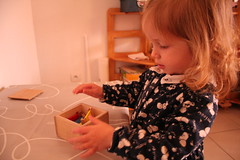
Parents of students across all 50 states have enrolled their kids in Montessori schools more and more frequently over the years. But what is a Montessori school? What benefits do these alternative forms of education offer?

Montessori Schools Can Help Children Socialize

Traditional public schools in the United States - and across the globe, for that matter - have largely segregated students based on ages. Kids in any given grade are rarely one year older or younger than one another. As such, children only learn to communicate with their same-aged peers - not much of a growth opportunity there.

Montessori schools pack up to 30 students in one classroom; here's the catch - they're largely different ages. Such an environment can really help children of all ages mature more quickly and boost their communication skills.

These Systems Help Raise Free Thinkers

Unlike regular schools, Montessori programs encourage kids to think on their own - humming to the tune of everybody else's songs isn't necessarily a good thing. While this might not prepare students for close-knit traditional workplaces, Montessori graduates have been shown to be more entrepreneurial than their counterparts.

Montessori en famille, vie sensorielleStudents Are Happier

Far too many students aren't excited to go to school in today's world. However, the same can't be said about Montessori programs. Kids are allowed to be more free, independent, and do their own things.

With more than 2,000 of these schools spread across the United States, a quick search on your phone for "a Montessori preschool near me" should find one in your area.

Thursday, January 27, 2011

Collaborize Classroom a Free Online Learning Platform

This is a Sponsored post written by me on behalf of Collaborize Classroom. All opinions are 100% mine.

I've just been checking out Collaborize Classroom.  This looks like a really great tool for teachers.  It's a FREE online learning platform that allows teachers to extend their classroom discussions to a structured and private online community.  It's designed to complement and extend regular classroom instruction and to help teachers accomplish more with less.  Teachers can continue valuable discussions, facilitate online learning groups, encourage the sharing of resources, and provide students with a safe space to engage in collaborative learning.

Some of the key features include:
  • Attachments - teachers can attach photos, videos, PDFs, and Microsoft Office documents, eliminating the need for classroom handouts and saving on printing and paper costs.
  • Messaging - teachers and students can easily communicate with each other.
  • Participation Reports - teachers can track each student's activity on the site.
  • Privacy - sites are password protected and can only be accessed by teacher and students (or those invited to join the site) and No classroom data or information can be viewed online without a password and special access to the teacher's site.
  • Teacher Resources - free resources and lessons plans to help teachers get started using Collaborize Classroom.
  • and it's FREE - and easy to get started.  Teachers can create a site in a matter of minutes.  All that's needed is an email address.
The video explains it all really well:


"some need more time to formulate their responses" - that's me. You know I love teachers, and I believe in giving them as many tools as possible.  I also know that everyone learns differently, and using an online learning platform like Collaborize Classroom may be just the thing to reach those kids who aren't quite getting it in the classroom and take others to even higher levels of learning.  If you're a teacher, be sure to check it out.  If you have kids in school, share this with their teachers.

Visit Sponsor's Site

Wednesday, March 11, 2009

Don't Know Much

According to Cory, I got that whole Newton thing wrong in my post a couple days ago. He explained it all, though I'm not sure I understood it.

Sometimes my kids talk about what they're learning in school, and I wonder if I learned that when I was in school. If I did, I can't remember it now. It makes me wonder how important the stuff I learned in school really was. Of course, I could never say that when Beth was complaining about how much she hated school and how she was never going to use anything she learned, anyway.

Looking back, I'm sure I learned the things I was supposed to in school. I'm not sure if I learned because I was interested and wanted to learn, or just because I wanted to get good grades. I do remember enjoying organic chemistry, sociology, and studying WWII and the history of Rock 'n Roll in history class, but that's about it. Oh, and I did like Algebra but hated Geometry. Do I actually remember any of it? Not so much.

Thankfully, I've discovered the Don't Know Much About series of books by Kenneth C. Davis. I have the latest one Don't Know Much About anything else, and it is packed with all kinds of things I never learned about famous people, exceptional places, historic happenings, remarkable inventions, and more. I love the format of this book. You get a page with a short paragraph about the subject then a short quiz with a few fun questions. For instance the page for California looks like this:
From Death Valley and Silicon Valley and Napa Valley to Valley Girls, California is a special state - of mind. America's most populous state, which was admitted into the Union in 1850 following the Mexican War, discovered gold in 1848 and experienced the Gold Rush in 1849. America's third largest state (after Alaska and Texas) has been attracting dreamers for centuries. What do you know about the "Golden State"? Try this quick quiz:
  1. Where does the word California come from?
  2. Who were the first Europeans to settle in California?
  3. The 1930s influx of migrant workers into California inspired what novel by which native Californian?
  4. If California has one great fault, what is it?
...and then you turn the page for the answers. I got #4 right! (What? You think I should give you the answers? I was going to say you need to get the book for those, but I'll leave them in a comment. If you want to see what else you can learn, you'll need the book for that.)

The whole Don't Know Much About series is built around quirky, offbeat and occasionally irreverent questions meant to get people thinking in new ways. It's real quick and easy to just pick the book up in a spare moment and learn something new. And it's fun - if only learning could be so interesting in school! I might even start understanding what the kids are learning - either that or I 'll know stuff they don't know much about. Now, won't that be fun?

Another random question about California: In what city in California was I born? ( you won't find the answer to that one in the book!)

Tuesday, February 03, 2009

Internet Research

I always like learning new things, which is why I enjoyed reading the article about zebras I linked to in the previous post. I probably won't remember what I learned, but I think the important thing isn't memorizing facts, but knowing how to find the answer. I keep telling the kids that's what's important, though remembering enough to pass the test is important, too.

Next time I want to know what color a zebra's stripes are, I can look it up again. If I ever want to know the difference between holodomor and golodomor, I can look that up, too. If you click the link, you can read a little about it. I admit, I don't know much about the Soviet famine of 1932-1933 or who or what was responsible, but the information is out there.

The Internet makes research really easy. The important thing to remember is that just because it's written somewhere on the Internet, that doesn't necessarily mean it's true. After all, if I had told you in that last post that the zebra's stripes are black, that could have been true, or it could have just been my personal opinion. Would you have believed me? Or would you have wanted to do a little research to find out if anyone else agreed with me?

The good news is that there is a wealth of information available online. The bad news is that there is a wealth of information online. You can't just search and take the first answer you find. You need to read through several articles and be selective with the information you choose to believe and share. Internet research is easy, but you still have to put some work into it. And sometimes you just need to go to the library and look through some books.

Friday, December 26, 2008

Learning Study Skills

Your child's success in school is strongly tied to his or her Study Skills. Most schools don't teach study skills. I think that's a shame, because the purpose of school should be to teach students how to learn instead of simply asking them to memorize a bunch of facts they're most likely going to forget. Students simply go to class, do homework and take tests. Some students do well, some don't. Those who don't do well in school may just not understand why they need to learn this stuff. After all, they're never going to use it in real life. You've heard that before, haven't you?

Or maybe with just a little guidance, those same students can discover their own individual learning style and the best strategies to learn and comprehend their school lessons. I'm a Visual Learner, something I didn't consciously realize until I was out of school. For me that means, as long as I can read the book, I can usually figure it out. But some people need to hear it and some need to actually do something in order to learn.

Club Z! tutors can help your child learn these skills now so he or she can begin doing better in school. Club Z! offers one on one tutoring in the comfort of your own home. They offer tutoring for students Pre-K through 12th grade and adults in all core subjects. They also help with standardized test prep, so it might be worth looking into to get Cory ready for the ACT, which he is going to have to take before too long. Club Z! tutors have helped over 100,000 students improve their grades, raise their test scores, and build their academic self-confidence.

Tuesday, November 25, 2008

A Deaf High School Musical

I saw this on the news tonight, and I thought it was so neat. A school in Florida put on a production of "West Side Story". The school is the county's main school for deaf and hard of hearing students, so quite a few deaf students tried out for the musical. Then the drama teacher decided to take a different approach to the story:
"What's inherent in the script is that we have a clash of two cultures," Zembuch said. "The original production is a clash between the Puerto Ricans and the Americans. In this production, we have a clash of not only the Puerto Ricans and the Americans but also the deaf and the hearing."
He adapted the story so that the Jets are hearing and most of the Sharks are deaf, including Maria. Two girls actually played Maria, one girl as the deaf Maria, and the other girl as her voice. Sign language was woven into the choreography, and a hearing boy learned sign language so he could play a deaf boy. The production cost $43,000 and the students had to raise it all with candy sales, car washes, program sponsors, ticket sales, auto parts franchises, whatever it took.

I probably haven't explained it very well, but it was really amazing. Watch the video and read the whole story here, and you'll see what I mean.

Thursday, February 07, 2008

Play a Little Game or Two

Frigga posted a couple of time wasters today - like I needed something else to waste my time on. Thanks a lot, Frigga! Actually , they were both pretty fun, and I'll probably go back and mess with them again. It reminded me of this little game someone sent me a while back. I sent it to my daughter when she was learning to drive, and, most importantly, learning to parallel park. She didn't think it would help her at all, but I thought it was fun, and addictive. Let me know what you think.

Another game I really like, and don't feel is a total waste of time, is Free Rice. It's a vocabulary game, where you can not only improve your vocabulary, but feed hungry people, too. For every word you get right, they donate 20 grains of rice to the United Nations World Food Program. I find that it is quite addictive. I couldn't even finish this blog post without playing long enough to donate 200 grains of rice! Sometimes I just have to close the tab and walk away.

Have fun.

Wednesday, July 18, 2007

Grades Are Important

Beth used to be a good student. She got good grades, and then came 8th grade. Suddenly she was barely passing some of her classes. Did my smart daughter suddenly become dumb? Did the schoolwork between 7th and 8th grade suddenly get harder? Her teachers all believed she could do much better, but she didn't seem to want to put forth any effort. Having friends and being popular seemed to be more important than doing her schoolwork. Every time we offered to help her, she made it clear that she did not want our help. Now I'm thinking that we probably should have done more. We kept trying to come up with the right incentive to get her to work harder, like the need for good grades so she could drive. That didn't work. Maybe we should have found her an innovative tutor who could have helped her, someone who could have made learning fun and engaging, something.

She's got two more years of high school. Maybe it's not too late. If only she could get excited about something besides hanging out with her friends. What about the rest of her life? We just can't convince her that what she does now will affect what she can do for the rest of her life.